In the rapidly evolving landscape of remote collaboration, the nuances of video conferencing setup have emerged as a critical factor in professional communication. Among these, the adjustment of camera angles before joining a meeting is no longer a mere technicality but a fundamental aspect of presenting oneself effectively in virtual environments. As organizations continue to embrace hybrid and fully remote models, understanding and optimizing this element can significantly influence perceptions, engagement, and overall meeting productivity.
The camera angle serves as the digital equivalent of eye contact and body positioning in face-to-face interactions. A poorly adjusted camera can distort facial expressions, create unflattering shadows, or even convey disinterest if positioned incorrectly. Conversely, a well-calibrated angle fosters a sense of presence and professionalism, making participants feel more connected and engaged. It's not just about vanity; it's about ensuring that non-verbal cues are accurately transmitted, which is essential for effective communication.
Many professionals overlook this aspect, hastily joining meetings with cameras positioned too low, too high, or off-center. A camera placed below eye level, for example, can create an upward shot that emphasizes nostrils and chin, often perceived as dominant or confrontational. On the other hand, a camera angled too high might make the user appear diminutive or disconnected. The goal is to achieve a straight-on, eye-level perspective that mirrors natural conversation. This requires intentional setup, perhaps using books or stands to elevate laptops or external webcams to the appropriate height.
Lighting plays a symbiotic role with camera angle. Even the perfect angle can be undermined by poor lighting, such as strong backlighting that silhouttes the user or overhead lights that cast harsh shadows. Natural, diffused front lighting is ideal, complementing a well-adjusted camera to ensure clarity and warmth in the video feed. Investing time in testing different angles and lighting conditions before meetings can prevent distractions and maintain focus on the content of the discussion rather than technical shortcomings.
Beyond individual presentation, consistent camera angles across team members can enhance collective meeting dynamics. When everyone adopts a similar eye-level perspective, it creates a visual uniformity that mimics sitting around a conference table, fostering equality and cohesion. This is particularly valuable in collaborative settings where brainstorming and decision-making rely on equal participation. Teams might even establish simple guidelines for camera setup to standardize virtual presence, reducing the cognitive load of adjusting to varying visuals mid-meeting.
The psychological impact of a properly set camera angle should not be underestimated. Research in virtual communication suggests that participants who appear at eye level are perceived as more confident, trustworthy, and engaged. This subtle advantage can influence leadership perceptions, client relationships, and even internal team dynamics. In a world where first impressions are often formed through screens, taking control of one's camera setup is a low-effort, high-reward strategy for professional advancement.
Moreover, as video conferencing platforms integrate advanced features like background blur, eye contact correction, and automatic framing, the importance of foundational camera adjustment remains. These tools can enhance video quality but cannot fully compensate for a poorly positioned camera. Users should view technology as a complement to, not a replacement for, mindful setup. For instance, an automatic framing feature might crop the image optimally, but if the initial angle is misaligned, the result may still feel unnatural or disengaged.
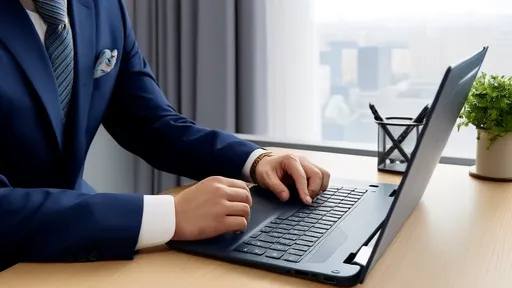
Practical steps for optimal camera adjustment include conducting pre-meeting checks using the platform's preview feature, ensuring the camera is at eye level, and framing the shot to include the head and shoulders with a slight headroom. Testing with colleagues during non-critical meetings can provide valuable feedback for refinements. Additionally, considering the background in relation to the camera angle is crucial; a cluttered or distracting background can undermine even the best-angle setup.
In conclusion, the adjustment of camera angles before video conferences is a small yet powerful detail in the architecture of modern professional communication. It bridges the gap between physical and virtual presence, ensuring that participants are seen in the best possible light—both literally and figuratively. As remote work continues to define the future of collaboration, mastering this skill will separate the prepared from the peripheral, turning every video call into an opportunity to connect, communicate, and lead with confidence.

By /Aug 26, 2025
By /Aug 26, 2025
By /Aug 26, 2025
By /Aug 26, 2025

By /Aug 26, 2025
By /Aug 26, 2025

By /Aug 26, 2025

By /Aug 26, 2025

By /Aug 26, 2025
By /Aug 26, 2025

By /Aug 26, 2025

By /Aug 26, 2025

By /Aug 26, 2025
By /Aug 26, 2025

By /Aug 26, 2025
By /Aug 26, 2025

By /Aug 26, 2025
By /Aug 26, 2025
By /Aug 26, 2025

By /Aug 26, 2025