Rescue and Prevention Measures for Ganache Emulsion Failure: Oil-Water Separation

Aug 29, 2025 By

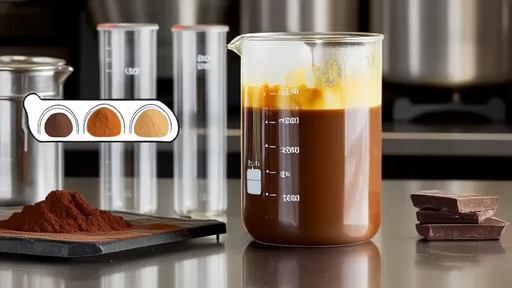
There is perhaps no greater heartbreak in the patisserie kitchen than the moment a ganache splits. One moment you are stirring a velvety, molten blend of chocolate and cream, the very essence of indulgence. The next, you are staring into the bowl at a grainy, oily puddle, a stark symbol of culinary defeat. This phenomenon, known as "breaking" or "separation," is a classic example of an emulsion failure. But fear not, for this is not a death sentence for your dessert. With a bit of knowledge and a calm hand, a broken ganache can almost always be rescued, and future failures can be prevented.

The fundamental science behind ganache is the creation of a stable emulsion. An emulsion is a mixture of two liquids that normally don’t combine, like oil and water. In the case of ganache, the two main players are the cocoa butter (the fat from the chocolate) and the water content from the cream. Chocolate itself is already a marvel of food science—a stable emulsion of cocoa solids, cocoa butter, and often sugar and milk solids. When you introduce hot liquid, you are essentially creating a new, more complex emulsion. The goal is to disperse microscopic droplets of the fat throughout the water-based liquid, creating a smooth, homogenous, and stable mixture. This stability is fragile and hinges on two critical factors: temperature and agitation.

When a ganache breaks, it means the delicate balance has been tipped. The fat molecules, once comfortably suspended, begin to coalesce and separate out from the watery liquid. The most common culprit is temperature shock. Adding hot cream to cool chocolate, or conversely, adding cool cream to melted chocolate, can cause the cocoa butter to seize or separate prematurely. Excessive heat after emulsification is another prime offender. Letting the ganache get too hot will cause the fat to liquefy completely and rise to the top. Conversely, if the mixture is too cold when you try to combine them, the cocoa butter will solidify on contact, creating a grainy, clumpy texture instead of a smooth flow. The other main cause is improper agitation. While initial vigorous stirring is necessary to create the emulsion, over-mixing, especially with a whisk, can actually cause the emulsion to break by forcing the fat droplets to crash into each other and merge. Under-mixing, on the other hand, fails to properly disperse the fat in the first place.

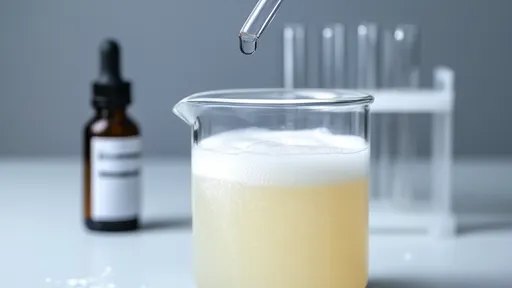
Before you even think about tossing a failed batch, take a deep breath. The path to redemption is often straightforward. The first and most reliable method is the simple addition of more liquid. The key is to start with a small amount of room temperature or slightly warm liquid. This can be more cream, whole milk, or even just a tablespoon or two of hot water. Remove the broken ganache from the heat. Add a small splash of your chosen liquid and stir gently with a spatula or spoon, starting from the center and working your way out. You are essentially providing new water molecules to help re-suspend the fat droplets. Often, this small addition is enough to bring the mixture magically back together into a silky-smooth state.

If the simple liquid addition doesn’t do the trick, it’s time to employ the emergency emulsion method: an immersion blender. This powerful tool is a ganache rescuer’s best friend. Transfer your broken ganache to a tall, narrow container if possible—this helps create a vortex. Add a small amount of warm liquid (a tablespoon of cream or hot water). Insert the immersion blender and turn it on, moving it up and down to incorporate air and force the mixture back into a stable emulsion. The sheer power and fine blending action can often force the stubborn fat and water to play nice again. Be cautious not to over-blend, as you can incorporate too much air, but a short 15-30 second blast is usually sufficient.

In more dire situations, you may need to start over with a small base emulsion. This method involves creating a new, stable emulsion in a separate bowl and then slowly incorporating your broken mixture into it. Take a small amount of your broken ganache (about a quarter of the total) and place it in a new bowl. Add a tablespoon of warm cream and vigorously whisk until it becomes perfectly smooth and thick—this is your new "base." Now, very slowly, drizzle in the rest of the broken ganache while continuously whisking. This technique works because you are gradually introducing the unstable mixture into a stable one, convincing the entire batch to follow suit.

Of course, the best strategy is to avoid the problem altogether. Prevention is rooted in understanding and controlling the process. It all begins with quality ingredients. Use good-quality chocolate with a reliable cocoa butter content. Cheap compound coatings or low-quality chocolate have different fat structures and stabilizers that can behave unpredictably. Chop your chocolate uniformly into small pieces; this creates more surface area and allows for even, quick melting when the hot cream hits it.

The temperature is your most critical variable. The classic technique is to heat your cream until it is just simmering, with small bubbles forming around the edges. Pour it over your finely chopped chocolate in a heatproof bowl. Let it sit for a minute or two to allow the heat to gently soften the chocolate, then begin to stir. Start stirring slowly from the center, creating small circles that gradually widen to incorporate the entire mixture. This gentle approach encourages a smooth emulsion without aggressively forcing the fat out. A silicone spatula is ideal for this as it cleans the sides of the bowl effectively.

If you are making a ganache that requires heating the entire mixture together in a double boiler, be exceptionally vigilant. Use low, gentle heat and stir constantly but not aggressively. The moment the chocolate is almost fully melted and the mixture is becoming smooth, remove it from the heat. The residual heat will finish the job without risking overheating. Never let your ganache boil. Always err on the side of caution; you can always gently re-warm a too-thick ganache, but you cannot always fix a scorched or boiled one.

Finally, understand that different types of ganache have different personalities. A dark chocolate ganache, with its higher cocoa solid and lower dairy fat content, is generally more forgiving than a milk or white chocolate ganache. White chocolate, being almost pure cocoa butter, sugar, and milk solids, is notoriously temperamental and requires extra care with temperature to prevent seizing or splitting. The ratio of chocolate to cream also dictates the final texture and stability. A 1:1 ratio for a pouring ganache is more liquid and can be more prone to breaking if handled roughly, while a 2:1 chocolate-to-cream ratio for a firmer, piping ganache is generally more stable due to the higher fat and solid content.

Mastering ganache is a rite of passage for any serious baker. It teaches patience, precision, and respect for the ingredients. A broken ganache is not a failure; it is a lesson. It is an opportunity to understand the delicate dance between fat and water, heat and motion. With these抢救 techniques in your arsenal and these preventive measures as your guide, you can approach this fundamental component of dessert-making with confidence. Remember, the line between a disaster and a masterpiece is often just a tablespoon of warm cream and a steady hand.
Recommend Posts
Food

Fermented Beverages: Differences in Starter Cultures for Kefir, Kvass, and Sweet Rice Wine

By /Aug 29, 2025

Traditional fermented beverages have been cherished across cultures for centuries, not only for their unique flavors but also for their cultural significance and health benefits. Among these, kefir, kvass, and sweet rice wine stand out as prominent examples, each harboring a distinct microbial ecosystem that drives the fermentation process. The differences in their microbial consortia are not merely academic; they shape the sensory profiles, nutritional properties, and even the cultural practices surrounding these beverages. Understanding these microbial communities offers a window into the intricate world of fermentation, where tiny organisms work in concert to transform simple ingredients into complex, flavorful drinks.
Food

Alcohol-Free Extraction Technology: Flavor Retention Capacity of Rotating Cone Distillation Columns

By /Aug 29, 2025

The world of flavor extraction has witnessed a paradigm shift with the advent of alcohol-free technologies, and at the forefront of this revolution stands the Spinning Cone Column (SCC). This sophisticated piece of engineering has redefined the boundaries of what is possible in capturing and preserving the delicate, volatile essence of natural products. Unlike traditional methods that often rely on solvents like ethanol or hexane, the SCC operates on a principle of gentle vacuum and low-temperature distillation, creating an environment where even the most fragile aromatic compounds can be coaxed from their source material without degradation. The significance of this technology extends far beyond a simple technical achievement; it represents a fundamental change in how the food, beverage, and fragrance industries approach the very soul of their products—their flavor.
Food

Blind Taste Test of Water Quality: The Correlation between TDS Values and Smoothness of Taste

By /Aug 29, 2025

Water enthusiasts and casual consumers alike often find themselves debating the merits of various bottled and filtered waters, with taste and mouthfeel being primary points of discussion. A common metric thrown into these conversations is TDS, or Total Dissolved Solids. This figure, measured in parts per million (ppm), represents the total concentration of dissolved substances in water. These can include minerals like calcium, magnesium, sodium, and potassium, as well as trace amounts of other organic and inorganic compounds. The prevailing wisdom in many circles suggests a direct correlation: the higher the TDS, the more pronounced the flavor and the less "smooth" the water feels. But is this relationship so straightforward? A recent series of blind taste tests aimed to explore the nuanced connection between a water's TDS value and its perceived smoothness on the palate, yielding some surprising and thought-provoking results.
Food

Control of Syrup Saturation: Managing Supersaturation and Crystallization Risk

By /Aug 29, 2025

The world of syrup production operates on a delicate and fascinating scientific principle: supersaturation. This state, where a solution holds more dissolved solute than it theoretically should under equilibrium conditions, is the very engine of productivity for countless industries, from sugar refining and pharmaceutical manufacturing to the creation of confectionery and honey. However, this productive state is inherently unstable, a veritable tightrope walk between desired concentration and the ever-present danger of uncontrolled crystallization. Mastering the control of this state is not merely a technical procedure; it is the fundamental art and science that separates a high-quality, consistent product from a failed, grainy, or solidified batch.
Food

The Degree of Tea Polyphenol Oxidation: The Transformation of Flavor Precursors by Fermentation Processes

By /Aug 29, 2025

The world of tea is a universe of subtle transformations, where a single leaf, through the alchemy of processing, can yield a spectrum of aromas from grassy and vegetal to deeply malty and sweet. At the heart of this metamorphosis lies a fundamental chemical process: the enzymatic oxidation of polyphenols. It is this very process, meticulously controlled and often misnamed as "fermentation," that acts as the primary architect of a tea's final character, building the foundational flavor precursors that define our sensory experience.
Food

Symbiotic Balance of Yeast and Acetobacter in the SCOBY Microbiome

By /Aug 29, 2025

In the realm of fermented foods and beverages, one of the most fascinating biological partnerships exists within the gelatinous, pancake-like disc known as the SCOBY, an acronym for Symbiotic Culture Of Bacteria and Yeast. This living ecosystem, central to the production of kombucha, is not a singular organism but a complex metropolis of microorganisms. Its very existence and function are predicated on a delicate, dynamic, and powerful symbiotic balance between yeasts and acetic acid bacteria. Understanding this relationship is to understand the very heart of the fermentation process it drives.
Food

Cold Brew Extraction Efficiency: The Three-Dimensional Relationship of Time-Temperature-Grind Size

By /Aug 29, 2025

In the ever-evolving landscape of coffee craftsmanship, cold brew has carved out a significant niche, celebrated for its smooth, low-acidity profile and refreshing character. Yet, behind its seemingly simple preparation—coarse grounds steeped in cold water for an extended period—lies a complex interplay of variables that dictate the final cup's quality and efficiency. The extraction efficiency in cold brewing is not governed by a single factor but by a delicate three-dimensional relationship between time, temperature, and grind size. Mastering this triad is essential for both home enthusiasts and commercial producers aiming to optimize flavor, consistency, and resource utilization.
Food

Oak Barrel Aging: Kinetics of Tannin/Lignin/Vanillin Extraction

By /Aug 29, 2025

The alchemy of wine aging in oak barrels remains one of the most fascinating and complex processes in oenology. While the romantic imagery of dusty cellars and silent, slumbering barrels is appealing, the true magic lies in the intricate dance of chemistry occurring at the wood-wine interface. This dynamic exchange, far from being a simple passive infusion, is a sophisticated kinetic process where compounds like tannins, lignin, and vanillin are methodically liberated from the oak and integrated into the wine, fundamentally shaping its final character, structure, and aroma.
Food

Hops Isomerization: The Formation of Bitterness from α-Acid to Iso-α-Acid

By /Aug 29, 2025

The transformation of alpha acids into iso-alpha acids through isomerization is one of the most critical chemical reactions in brewing, defining the very essence of beer's bitterness. This process, while seemingly straightforward, involves a delicate interplay of chemistry, time, and temperature that brewers have sought to master for centuries. The journey from the raw, resinous hop cone to the clean, biting bitterness in a finished pint is a story of molecular rearrangement, where insoluble compounds become the soluble bitter agents that beer lovers recognize and expect.
Food

Impact of Water Minerals on Coffee Extraction Rate: The Alteration Caused by Calcium and Magnesium Ions

By /Aug 29, 2025

The relationship between water composition and coffee extraction has long fascinated both scientists and baristas, with particular attention paid to the roles of calcium and magnesium ions. These minerals, often measured as components of water hardness, are far from mere impurities; they are active participants in the transformation of ground coffee into a complex beverage. The journey of a coffee bean from harvest to cup involves numerous variables, but the water used for brewing might be the most overlooked yet consequential factor of all.
Food

Optimization of Alcohol/Syrup/Stabilizer Ratios for Ice Crystal Inhibition Scheme

By /Aug 29, 2025

In the world of frozen desserts and beverages, the persistent challenge of ice crystal formation has long plagued product developers and manufacturers alike. The quest for that perfect, velvety texture free from gritty ice particles has driven extensive research into various inhibition methods. Among the most promising approaches lies the strategic combination of alcohols, syrups, and stabilizers—a sophisticated trio working in concert to transform the freezing process and deliver superior quality to consumers.
Food

Comparison of Gel Strength: Application of Bloom Values in Agar, Carrageenan, and Pectin

By /Aug 29, 2025

In the world of food science and industrial applications, the measurement and comparison of gelling agents remain a cornerstone for product development and quality control. Among the most widely used hydrocolloids, agar, carrageenan, and pectin stand out for their unique properties and versatile functionalities. A critical parameter for evaluating these substances is the Bloom value, a standardized measure of gel strength that provides invaluable insights into their performance and suitability for various applications. Understanding the Bloom values of agar, carrageenan, and pectin not only aids in selecting the right gelling agent but also in optimizing formulations to achieve desired textures, stability, and consumer appeal.
Food

Mechanism of Puff Layer Formation: Utilizing the Melting Point Difference between Dough and Fat

By /Aug 29, 2025

In the world of pastry, few things are as universally cherished as a perfectly flaky croissant or a buttery, layered Danish. The magic behind these delicate creations lies in a process that has been refined over centuries, yet remains deeply rooted in basic scientific principles. At the heart of this alchemy is the clever manipulation of temperature and texture, specifically through the strategic use of the melting point differential between dough and fat. This fundamental mechanism is what allows bakers to transform simple ingredients into pastries with hundreds of crisp, separate layers.
Food

Rescue and Prevention Measures for Ganache Emulsion Failure: Oil-Water Separation

By /Aug 29, 2025

There is perhaps no greater heartbreak in the patisserie kitchen than the moment a ganache splits. One moment you are stirring a velvety, molten blend of chocolate and cream, the very essence of indulgence. The next, you are staring into the bowl at a grainy, oily puddle, a stark symbol of culinary defeat. This phenomenon, known as "breaking" or "separation," is a classic example of an emulsion failure. But fear not, for this is not a death sentence for your dessert. With a bit of knowledge and a calm hand, a broken ganache can almost always be rescued, and future failures can be prevented.
Food

Gluten Network of Flour: Protein Content in High-Gluten, Medium-Gluten, and Low-Gluten Flours

By /Aug 29, 2025

In the world of baking, the protein content of flour is not merely a technical specification—it is the very soul of the craft, the invisible hand that guides the texture, structure, and ultimate success of everything from a delicate pastry to a robust loaf of artisan bread. This protein, primarily in the form of glutenin and gliadin, is the architect behind the gluten network, a miraculous matrix that gives baked goods their unique character. Understanding the distinction between high-gluten, all-purpose, and low-gluten flours is, therefore, fundamental for any baker, professional or enthusiast, seeking to master their art.
Food

Ricotta vs. Cottage Cheese: Exploring Their Suitable Applications

By /Aug 29, 2025

In the world of culinary arts, few ingredients offer as much versatility and subtle nuance as cheese. Among the vast array of options available to both home cooks and professional chefs, ricotta and cottage cheese often find themselves at the center of a fascinating, and sometimes confusing, substitution debate. These two fresh, milky cheeses share a similar appearance and a common production heritage rooted in whey, yet they possess distinct characteristics that can dramatically alter the outcome of a dish. Understanding when one can stand in for the other, and when such a swap is a culinary misstep, requires a deep dive into their textures, flavors, moisture content, and cultural roles in cooking.
Food

Refractometer vs. Thermometer: Precision Comparison in Syrup Concentration Measurement

By /Aug 29, 2025

The measurement of syrup concentration stands as a critical control point in numerous industries, from food and beverage production to pharmaceuticals and chemical processing. Two of the most fundamental instruments employed in this task are the refractometer and the thermometer. While a thermometer gauges temperature and a refractometer measures the refractive index, their paths are intrinsically linked when determining the true solids content of a sugar solution. The central question for quality control professionals and process engineers is not merely which instrument to use, but understanding the nuanced interplay between their readings and the resulting impact on measurement accuracy.
Food

Protein Foam Stability: The Acidic Stabilization Mechanism of Tartaric Acid and Lemon Juice

By /Aug 29, 2025

In the intricate world of culinary science, the stability of protein-based foams stands as a critical factor influencing the texture, structure, and overall success of countless recipes, from airy meringues to delicate soufflés. Two common acidic agents, cream of tartar and lemon juice, are frequently employed to enhance this stability, yet their mechanisms and effectiveness differ in fascinating ways. This article delves into the acidic stabilization mechanisms of these two substances, exploring the underlying chemistry that dictates their performance in the kitchen.
Food

Chocolate Tempering Curve: Type Ⅴ Crystallization Temperature Control Window

By /Aug 29, 2025

Chocolate tempering remains one of the most crucial yet often misunderstood processes in confectionery and pastry arts. At its core, tempering is the controlled crystallization of cocoa butter to achieve a specific crystalline structure that gives chocolate its desirable characteristics: a glossy surface, a satisfying snap, and stable melting properties. Among the six known polymorphic forms of cocoa butter crystals, Form V, or beta crystals, are the gold standard for high-quality chocolate. Mastering the temperature control window for achieving and maintaining this Form V crystallization is what separates amateur attempts from professional-quality results.
Food

Domestication of Wild Yeast: Screening and Cultivation Process of Environmental Microorganisms

By /Aug 29, 2025

The art of domesticating wild yeast represents one of the most fascinating intersections of microbiology, ecology, and human ingenuity. For centuries, bakers, brewers, and fermenters have harnessed these invisible organisms, but only recently has a deeper scientific understanding emerged of how to systematically isolate and cultivate environmental microbes. The process is both an ancient tradition and a modern scientific pursuit, blending observational wisdom with laboratory precision.