Chocolate tempering remains one of the most crucial yet often misunderstood processes in confectionery and pastry arts. At its core, tempering is the controlled crystallization of cocoa butter to achieve a specific crystalline structure that gives chocolate its desirable characteristics: a glossy surface, a satisfying snap, and stable melting properties. Among the six known polymorphic forms of cocoa butter crystals, Form V, or beta crystals, are the gold standard for high-quality chocolate. Mastering the temperature control window for achieving and maintaining this Form V crystallization is what separates amateur attempts from professional-quality results.
The journey of chocolate from bean to bar is complex, but its final texture and behavior are dictated by the behavior of cocoa butter fat molecules. Cocoa butter is a polymorphic fat, meaning its molecules can arrange themselves into several different crystal lattice structures, each with distinct melting points and physical properties. The unstable Form I, II, III, and IV crystals melt at lower temperatures, resulting in chocolate that is soft, dull, grainy, and prone to fat bloom—those unappetizing white streaks that appear on the surface. The goal of tempering is to coax the majority of these fat molecules into forming the stable Form V and Form VI crystals. Form V, with a melting point just below the human body temperature, is responsible for that perfect combination of stability at room temperature and a luxuriously smooth melt-in-the-mouth sensation.
Navigating the temperature control window for Form V crystallization is a precise dance of heating, cooling, and reheating. The process begins with melting the chocolate completely to a temperature between 45°C and 50°C (113°F - 122°F). This initial heating step is critical as it ensures that all existing crystals, both stable and unstable, are fully dissolved, providing a blank slate of liquid cocoa butter. This is the foundation upon which the new, stable crystal structure will be built. Without completely erasing the crystal memory of the chocolate, achieving a consistent temper becomes nearly impossible.
The next phase is the cooling period, where the precise window for Form V nucleation begins. The molten chocolate must be cooled down to approximately 27°C - 28°C (81°F - 82°F). This is the most delicate part of the operation. During this cooling, the cocoa butter molecules begin to slow down and solidify. The objective is to encourage the formation of Form IV and Form V crystal "seeds" while avoiding the rapid formation of the less stable forms. Agitation—through stirring on a marble slab, using a machine, or simply mixing in a bowl—is essential here. It distributes the heat evenly and introduces shear forces that promote the formation of the desired small, stable crystals rather than large, unstable clusters.
However, the chocolate at this stage is thick, sludgy, and contains a mixture of crystals. To finalize the temper, the chocolate must be gently warmed again. This final warming step, bringing the chocolate to a working temperature of 31°C - 32°C (88°F - 90°F) for dark chocolate, is the final act of precision. This temperature is carefully chosen because it sits within a very specific thermal window: it is just high enough to melt out the unstable Form I-IV crystals, which have lower melting points, but just low enough to preserve the precious Form V seed crystals. For milk and white chocolates, which contain milk fats that interfere with crystallization, this working temperature is slightly lower, typically 29°C - 30°C (84°F - 86°F).
The consequence of missing this temperature window is significant. If the final temperature is too low, an overabundance of crystals will remain, making the chocolate too thick and difficult to work with, and it will set with streaks and dull spots. If the final temperature is too high, you risk melting all of the crystal seeds, including the stable Form V, effectively undoing the entire tempering process and returning the chocolate to an untempered state. The chocolate will then cool slowly and form primarily unstable crystals, leading to all the defects tempering seeks to avoid.
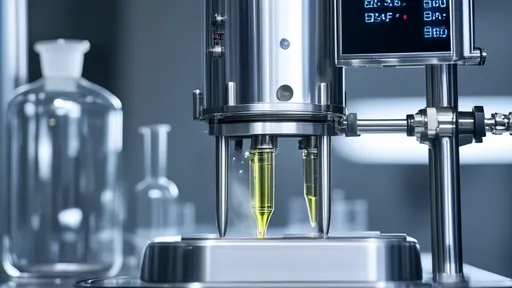
For the professional chocolatier, consistency is paramount. While a marble slab and spatula are the traditional tools of the trade, modern kitchens often employ tempering machines or melters that automate this temperature curve with remarkable accuracy. These machines heat, cool, and agitate the chocolate, holding it indefinitely within the perfect Form V window, ensuring that every dip, coat, and mold is executed with chocolate in its ideal state. This technological assistance is invaluable for production-scale work where hand-tempering large batches is impractical.
Ultimately, understanding and controlling the Form V crystallization window is the secret to exceptional chocolate work. It is a fusion of scientific principle and culinary art. A well-tempered piece of chocolate is not just a treat; it is a testament to the craftsman's skill in manipulating the very nature of the material. By respecting the precise temperatures required to nurture Form V crystals, one unlocks the full potential of chocolate, creating products that are as beautiful and stable as they are delicious.

By /Aug 29, 2025
By /Aug 29, 2025

By /Aug 29, 2025

By /Aug 29, 2025

By /Aug 29, 2025

By /Aug 29, 2025
By /Aug 29, 2025

By /Aug 29, 2025

By /Aug 29, 2025

By /Aug 29, 2025
By /Aug 29, 2025
By /Aug 29, 2025
By /Aug 29, 2025
By /Aug 29, 2025
By /Aug 29, 2025
By /Aug 29, 2025

By /Aug 29, 2025

By /Aug 29, 2025
By /Aug 29, 2025

By /Aug 29, 2025