The measurement of syrup concentration stands as a critical control point in numerous industries, from food and beverage production to pharmaceuticals and chemical processing. Two of the most fundamental instruments employed in this task are the refractometer and the thermometer. While a thermometer gauges temperature and a refractometer measures the refractive index, their paths are intrinsically linked when determining the true solids content of a sugar solution. The central question for quality control professionals and process engineers is not merely which instrument to use, but understanding the nuanced interplay between their readings and the resulting impact on measurement accuracy.
At its core, a refractometer is an optical device that measures how much light bends, or refracts, as it passes through a liquid sample. This bending is directly correlated to the concentration of dissolved solids, such as sucrose, in the solution. Modern digital refractometers provide a direct readout of the concentration, often in degrees Brix (% Brix), which is the percentage of sucrose by weight in a solution. The principle is elegant and, when calibrated correctly, provides a swift and remarkably precise measurement. However, this elegant principle harbors a critical vulnerability: its profound sensitivity to temperature.
The refractive index of a liquid is not a static property; it changes predictably with temperature. As the temperature of a syrup increases, its density decreases, causing light to travel through it differently and thus altering the refractive index. For highly accurate concentration measurements, this thermal effect cannot be ignored. A reading taken at 30°C will be significantly different from a reading of the same syrup taken at 20°C. Consequently, the stated accuracy of a refractometer—often dazzling on a spec sheet—is wholly contingent upon precise temperature control or compensation.
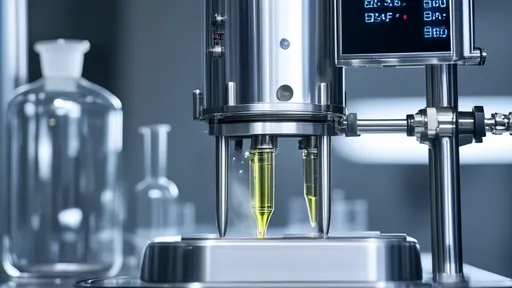
This is where the humble thermometer enters the stage, not as a competitor, but as an essential partner. The accuracy of the concentration value derived from the refractometer is only as good as the accuracy of the temperature measurement used to correct it. Most high-quality digital refractometers have Automatic Temperature Compensation (ATC). This feature is a small marvel of engineering; it uses an integrated temperature sensor to measure the sample's temperature and automatically adjusts the refractive index reading to what it would be at a standard reference temperature, typically 20°C.
Therefore, the true battle for precision is not refractometer versus thermometer. It is a more subtle conflict: the combined accuracy of the refractometer's optical system and its temperature compensation mechanism against the actual, physical properties of the syrup. The limiter in the system is often the thermometer component. If the ATC sensor is poorly calibrated, slow to respond, or placed in a suboptimal location within the sample chamber, it will feed an incorrect temperature value to the compensation algorithm. Garbage in, garbage out. A highly precise optical measurement will be rendered inaccurate by an imprecise temperature reading.
To understand this synergy, consider the specifications of both instruments. A high-end laboratory digital refractometer might boast an optical resolution of ±0.05% Brix and a temperature measurement accuracy of ±0.1°C. The overall accuracy of the concentration measurement is a function of both. The temperature accuracy is paramount because a small error there can propagate into a larger error in Brix. For instance, depending on the syrup concentration, an temperature error of just 0.5°C can lead to a Brix error of 0.1-0.3%. This might seem trivial, but in applications where product consistency, legality, or cost is paramount, this margin of error is unacceptable.
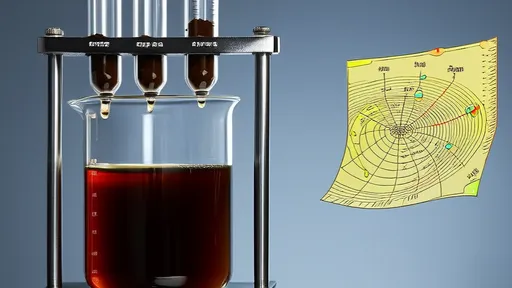
In contrast, the traditional method for determining syrup concentration is by using a thermometer in conjunction with a hydrometer. This glass instrument floats in the syrup, and its depth of immersion indicates the density. Like the refractive index, density is also heavily dependent on temperature. This method requires the user to take two separate measurements: one with the hydrometer to get a density reading and one with a thermometer to get the sample temperature. They must then consult a standardized conversion table to find the corrected concentration at the standard temperature.
The accuracy of this manual method is inherently lower. It introduces multiple points of potential error: parallax error in reading the hydrometer scale, the accuracy of the separate thermometer, the time lag between taking the two measurements (allowing for temperature drift), and human error in interpreting the conversion tables. The combined uncertainty can easily exceed ±0.5% Brix. Therefore, while the thermometer is the key to accuracy in both methods, the integrated, automated approach of a compensated refractometer drastically reduces the potential for error and delivers superior precision and repeatability.
The environment in which these measurements are taken further complicates the accuracy equation. In a stable, air-conditioned laboratory, both instruments can perform close to their theoretical specifications. However, on a factory floor, where ambient temperature can fluctuate wildly, the performance of the temperature measurement system becomes even more critical. A refractometer with a fast-response, high-accuracy temperature sensor will stabilize its reading quickly and reliably. A device with a sluggish or less accurate sensor will struggle, providing readings that drift as the sample equilibrates to the ambient temperature inside the measurement chamber.
Calibration is the final arbiter of accuracy for both tools. A refractometer must be calibrated using standard solutions of known concentration at a specified temperature. This process calibrates the entire system—optics and temperature sensor—against a known reference. A thermometer, whether standalone or embedded, is typically calibrated against an NIST-traceable reference thermometer or a temperature bath. Neglecting regular calibration for either component will inevitably lead to measurement drift and a false sense of security. The most precise instrument in the world is rendered useless if it is not properly calibrated.
In conclusion, pitting the refractometer against the thermometer is a mischaracterization of the challenge in syrup concentration measurement. The refractometer is the primary tool for direct measurement, but its accuracy is critically and unbreakably dependent on the precision of temperature assessment. The thermometer, therefore, is not a rival but the cornerstone of precise refractometry. The overall accuracy of a concentration measurement is a symphony conducted by the refractometer's optical precision but played by the accuracy of its temperature compensation. For any professional seeking truth in a bottle of syrup, investing in a instrument that excels in both is not an option; it is a necessity. The quest for precision is a dual pursuit, and victory is achieved only when both light and heat are measured with unwavering exactness.
By /Aug 29, 2025
By /Aug 29, 2025

By /Aug 29, 2025
By /Aug 29, 2025

By /Aug 29, 2025

By /Aug 29, 2025
By /Aug 29, 2025
By /Aug 29, 2025
By /Aug 29, 2025
By /Aug 29, 2025
By /Aug 29, 2025
By /Aug 29, 2025
By /Aug 29, 2025
By /Aug 29, 2025
By /Aug 29, 2025
By /Aug 29, 2025
By /Aug 29, 2025
By /Aug 29, 2025
By /Aug 29, 2025
By /Aug 29, 2025